NiTi Rotary Endodontic File — Innovative Technology for Safety
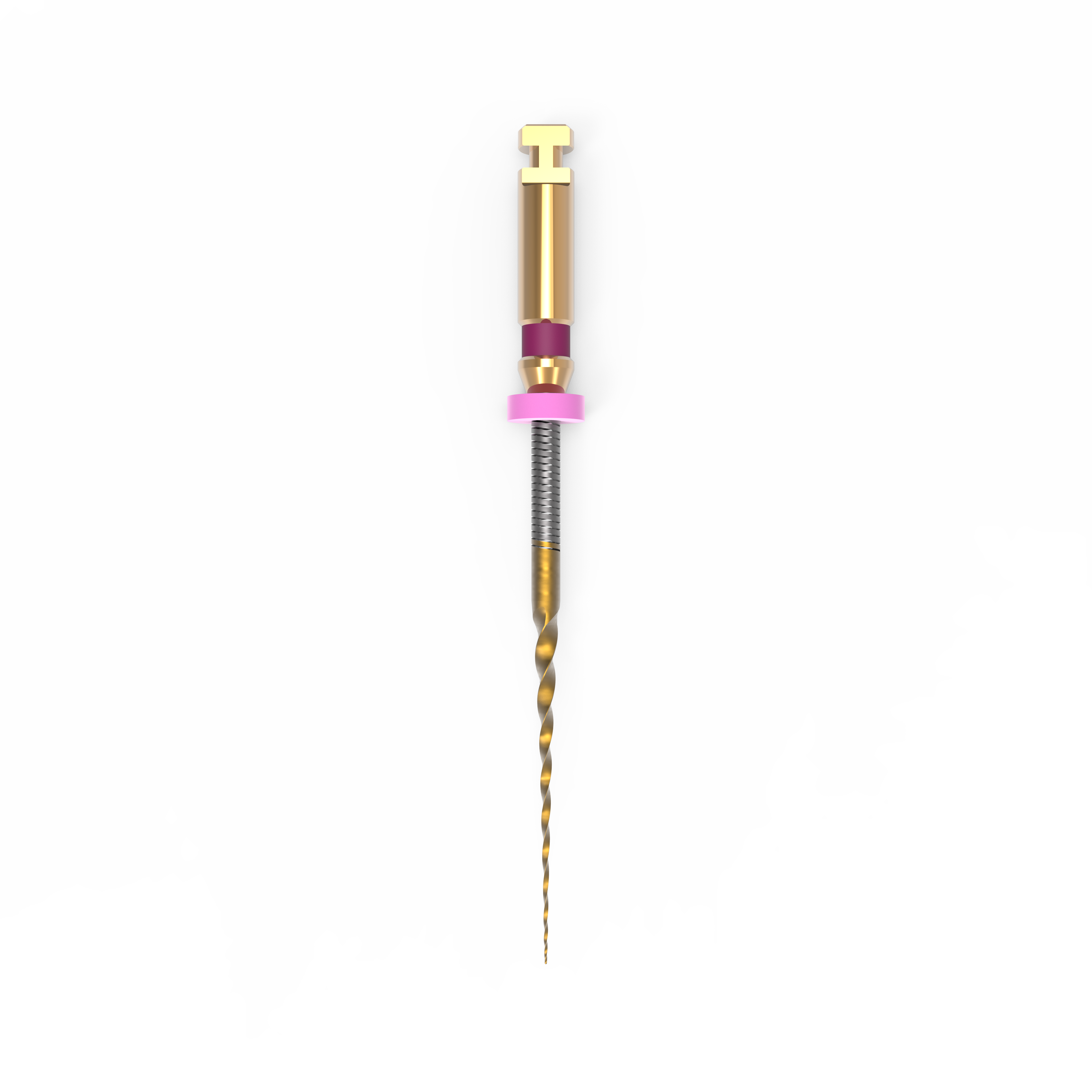
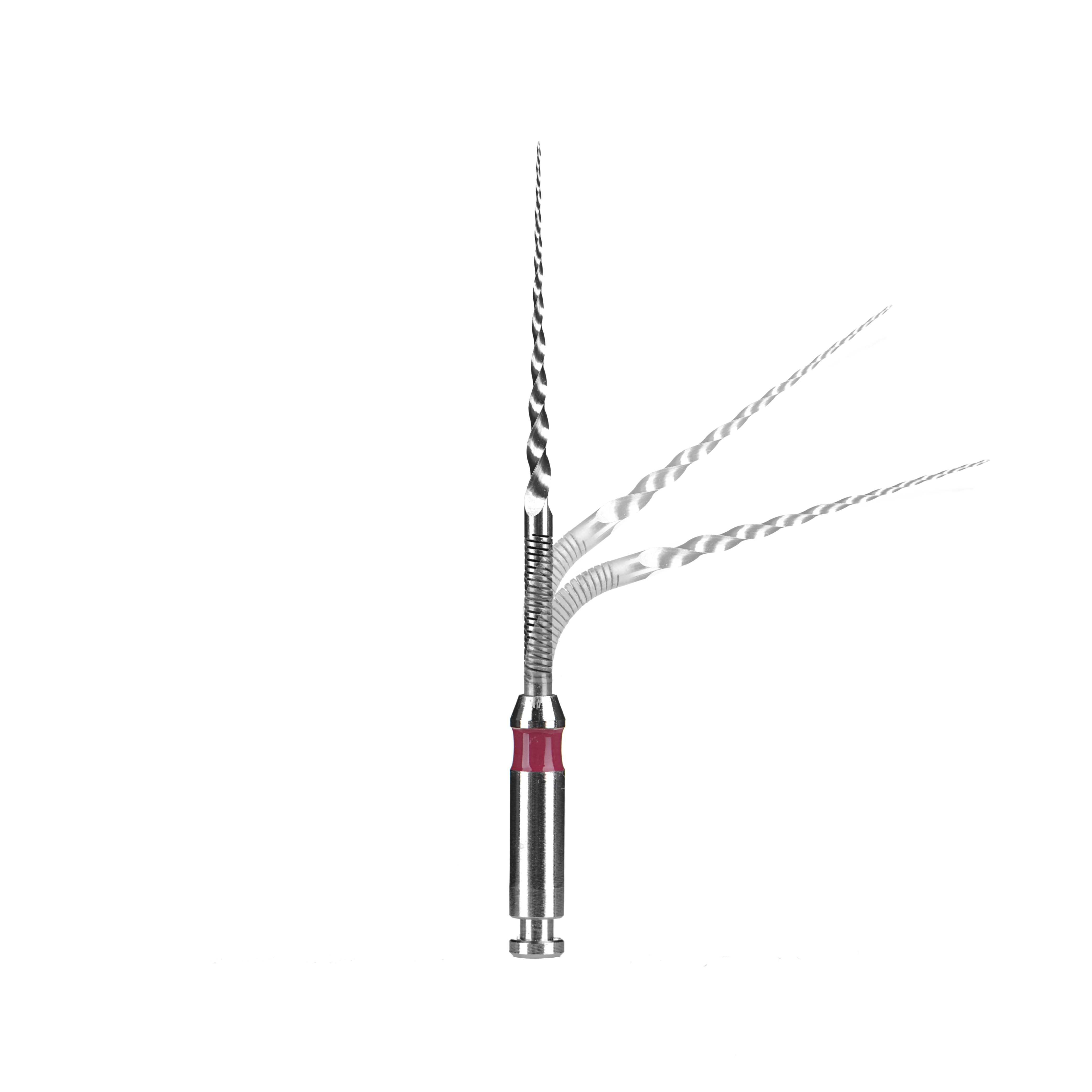
The Denflex Spring Endo File™ is a next-generation NiTi rotary endodontic instrument featuring a patented spring structure that minimizes fracture risk and maximises procedural safety. Trusted by clinicians worldwide for curved and complex root canals — now available in India through AJJA Dental Solution.
Download Product Brochure (PDF)The Spring Endo File™ represents a fundamental rethinking of NiTi file design — the spring structure solves the age-old problem of rotary file fracture, especially in curved and difficult root canals.
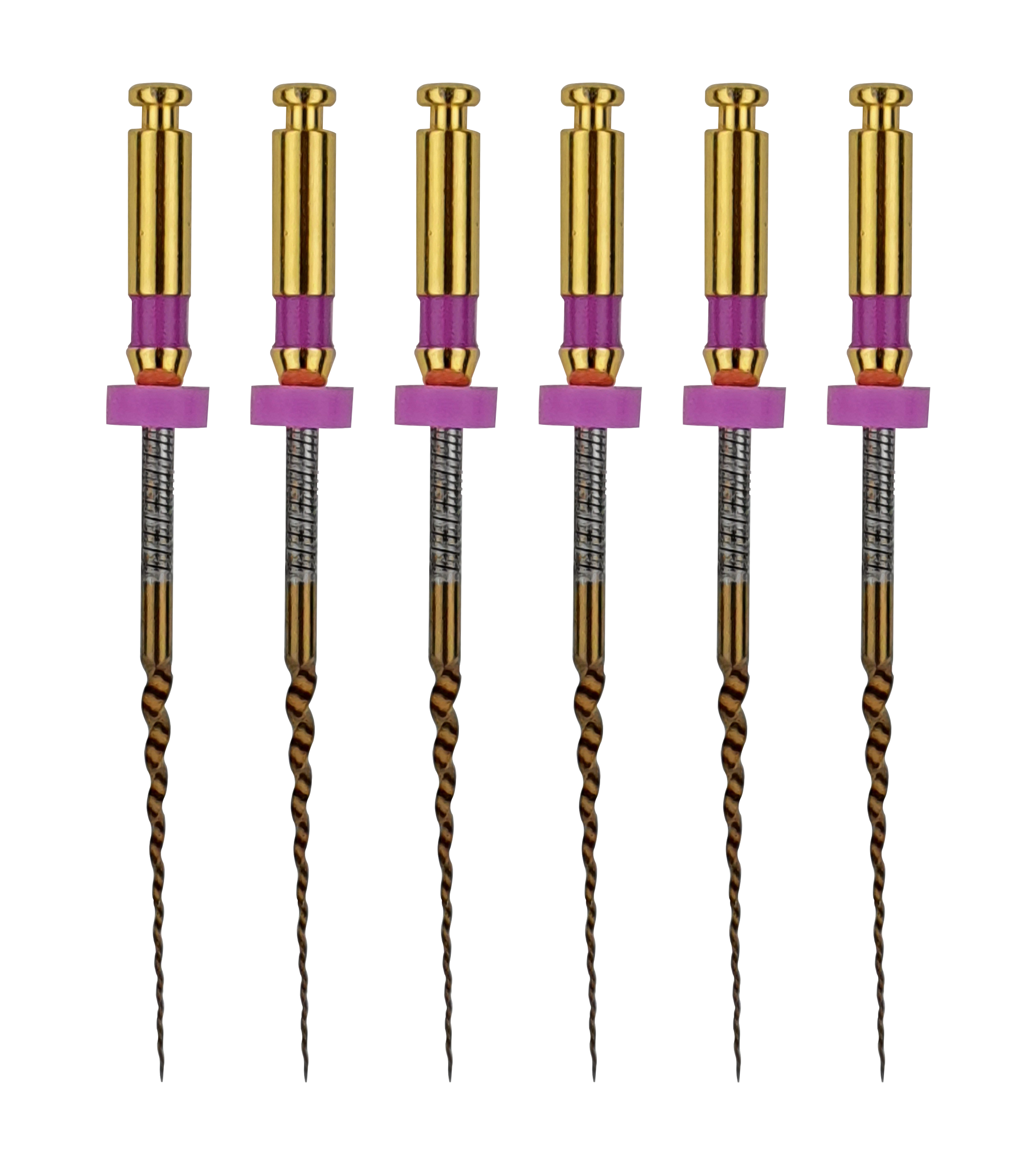
Spring Endo File™ — Standard & Heat Treated
Independent laboratory data and peer-reviewed research confirm the Spring Endo File's mechanical advantages over conventional non-spring NiTi files.
When overloaded, the spring zone fractures first — proximal to the orifice — making retrieval straightforward and safe.
Delivers full rotational torque even at 50–60° bends, maintaining cutting efficiency without sacrificing safety.
Micro-vibration of the spring section improves debris removal and reduces the risk of canal blockage.
Heat-treated variant offers shape memory — pre-curve outside the mouth, insert, and the file adapts to the canal anatomy.
Suitable for patients with restricted mouth opening — shaft bends without compromising the file tip's working action.
Backed by international patents and peer-reviewed publications on NiTi spring machining technology.
Optimised for both experienced endodontists and general practitioners — the Spring Endo File delivers predictable results with minimal learning curve.
Always perform orifice expansion before introducing the file. Inserting directly without orifice flaring may cause the tip to fracture immediately.
Set your endomotor to 300–450 RPM and 1.0–2.0 N·m torque. If cutting feels insufficient, increase by one level. For first use, position tip on orifice and rotate gently.
Lift the file slightly upward for better cutting performance. Do NOT apply lateral or downward pressure. Remove and clean debris from the blade during use.
After each use, remove cutting residues from the blade. Inspect the spring zone before reuse. Sterilise as per standard protocols. Replace if any deformation is observed.
Place the tip on the orifice and rotate gently to find the canal entrance. For those unfamiliar, starting in rotation with a #10 or #15 is recommended for easier orifice location.
Heat-treated files return to their original shape when heated with warm water or a dryer. Pre-curve outside the mouth for optimal adaptation in severely curved canals.
Do not apply lateral or downward pressure while rotating in the root canal. Let the file's own weight and the motor's torque do the cutting work for maximum safety.
Withdraw the file periodically and remove cutting debris from the blade. This maintains consistent cutting performance and extends the file's working life.
Perform pre-operational testing only on natural teeth. Do not test on resin blocks, as the material properties differ significantly from dentine.
When filing in the canal, gently lift the file slightly upward during the cutting stroke. This simple technique dramatically improves cutting efficiency and debris clearance.
Download the complete Denflex Spring Endo File brochure — featuring full product reference tables, ISO size charts, clinical performance data, cross-section diagrams, and usage tips from the manufacturer.
Download Brochure — FreeGet in touch with our team for product demonstrations, pricing, trial kits, and ordering. We respond promptly on WhatsApp or by phone — Mon to Sat, 9:30 AM – 7:00 PM.